
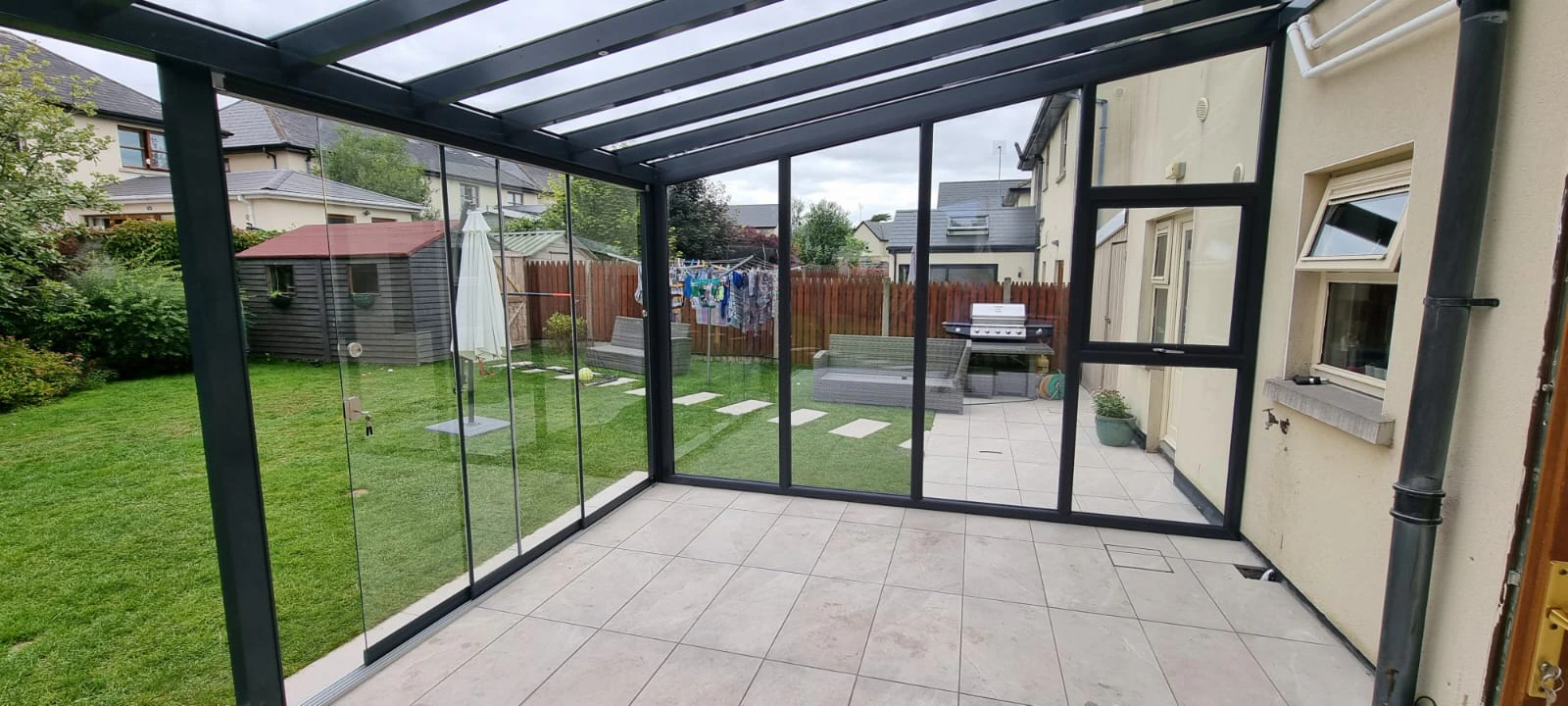
- No foundations · post-fixed to existing patio
- Open or enclosed · sliding glass converts the space
- 30–60 year lifespan · aluminium & toughened glass
- 4–8 weeks · enquiry to installed
What we mean by “garden room”
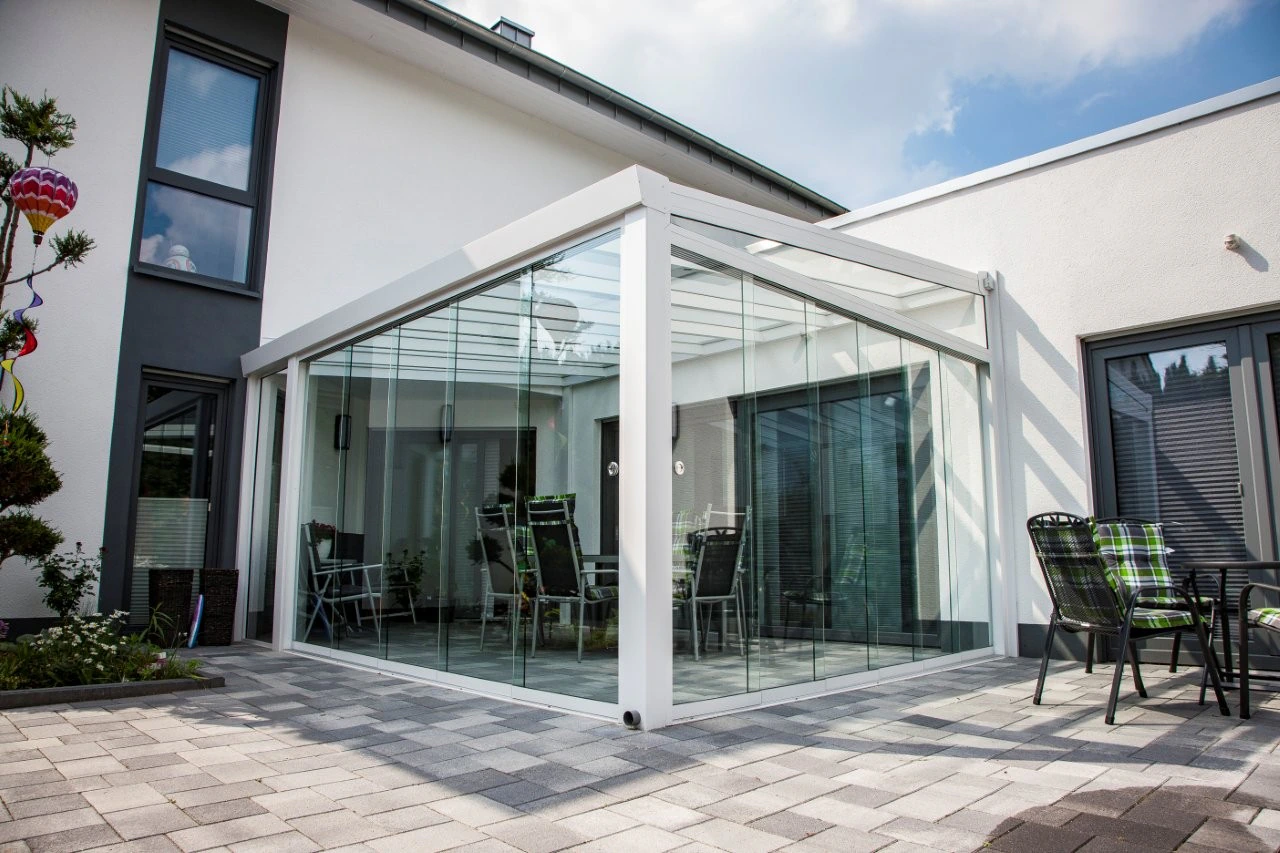
The phrase covers a lot of ground. For some buyers it’s a SIP-panel or timber outbuilding on a concrete pad — a separate building used as a home office, gym or studio. For others it’s an enclosed area off the back of the house used as a year-round lounge or dining space. Our approach sits closer to the second: we build an aluminium-and-glass veranda frame attached to your house, then add side options — sliding glass doors, fixed walls, louvres — to enclose as much or as little of it as you want.
The result is a space that works as an open covered patio in summer, a partly enclosed shelter in autumn, and a fully sealed garden room in winter — all from the same structure. No foundations, no excavation, no separate building.
Aluminium & glass vs SIP and timber — the honest comparison
Most UK garden room companies sell SIP-panel or timber outbuildings — well-built, properly insulated, but a different product to ours. Here’s how the two approaches compare in practice:
| Aluminium & glass (ours) | SIP / timber outbuilding | |
|---|---|---|
| Foundations | None — post-fix to existing patio | Concrete pad, screw piles or full slab |
| Install time | 1–5 days on site | 2–6 weeks (groundworks + build) |
| End-to-end | 4–8 weeks | 8–16 weeks plus |
| Lifespan | 30–60 years (marine-grade frames) | 15–25 years (treated timber/SIP cladding) |
| Open or closed | Both — sliding glass opens fully | Closed by design (door + windows only) |
| Insulation | Single or double-glazed sides; optional infrared heating | Continuous insulated panels — warmest by default |
| Planning | Usually Permitted Development (extension) | Outbuilding rules — height & floor caps apply |
| Where it fits | Attached to house, off patio | Detached — anywhere in the garden |
Neither approach is “better” in absolute terms — they suit different briefs. If you need a fully insulated, year-round-warm office that’s detached from the house and you’re comfortable with foundations and longer lead times, a SIP or timber building is probably the right call. If you want a year-round usable space that connects directly to the house, opens fully on warm days, installs in days not weeks and lasts 30–60 years, the aluminium-and-glass approach makes more sense.
How a garden room comes together
Every garden room we build is two decisions: a veranda model (the roof and frame) plus side options (how much of it you want enclosed).
The veranda models that suit a garden room
Almost every veranda in our range accepts side options and works as a garden room. Four models are particularly well-suited:
- Haven — British-built, glass or polycarbonate, marine-grade coating, 60-year design life. The sweet spot for residential garden rooms — bespoke styling, optional Victorian posts, and a build quality that suits period and modern homes alike. From £6,000 installed.
- Sanctuary — the widest spans (up to 6m between posts). Ideal if you want a large enclosed footprint without intermediate posts cutting up the space. Glass or polycarbonate roof. From £6,400.
- Horizon — flat-roof, glass-only, generous spans up to 7m. The right choice for bungalows, single-storey rear elevations, and any property where a sloped roof would dominate the elevation. From £9,200.
- Vista — the flagship. Chunky 150mm posts, flat or apex roof, glass-only. The most architectural option — suits modern homes and properties where the garden room becomes a visible architectural feature. From £11,800.
The Bolthole is our entry-level model and works as a small garden room at the lower end of the range. The full veranda lineup is on the Verandas hub.
Side options — from fully open to fully sealed
Six side options give you control over how enclosed the space is. You can leave the veranda completely open on every side, partly enclose it for shelter and privacy, or fully seal it with sliding glass for year-round indoor-style use. Most builds combine two or three different options on different sides:
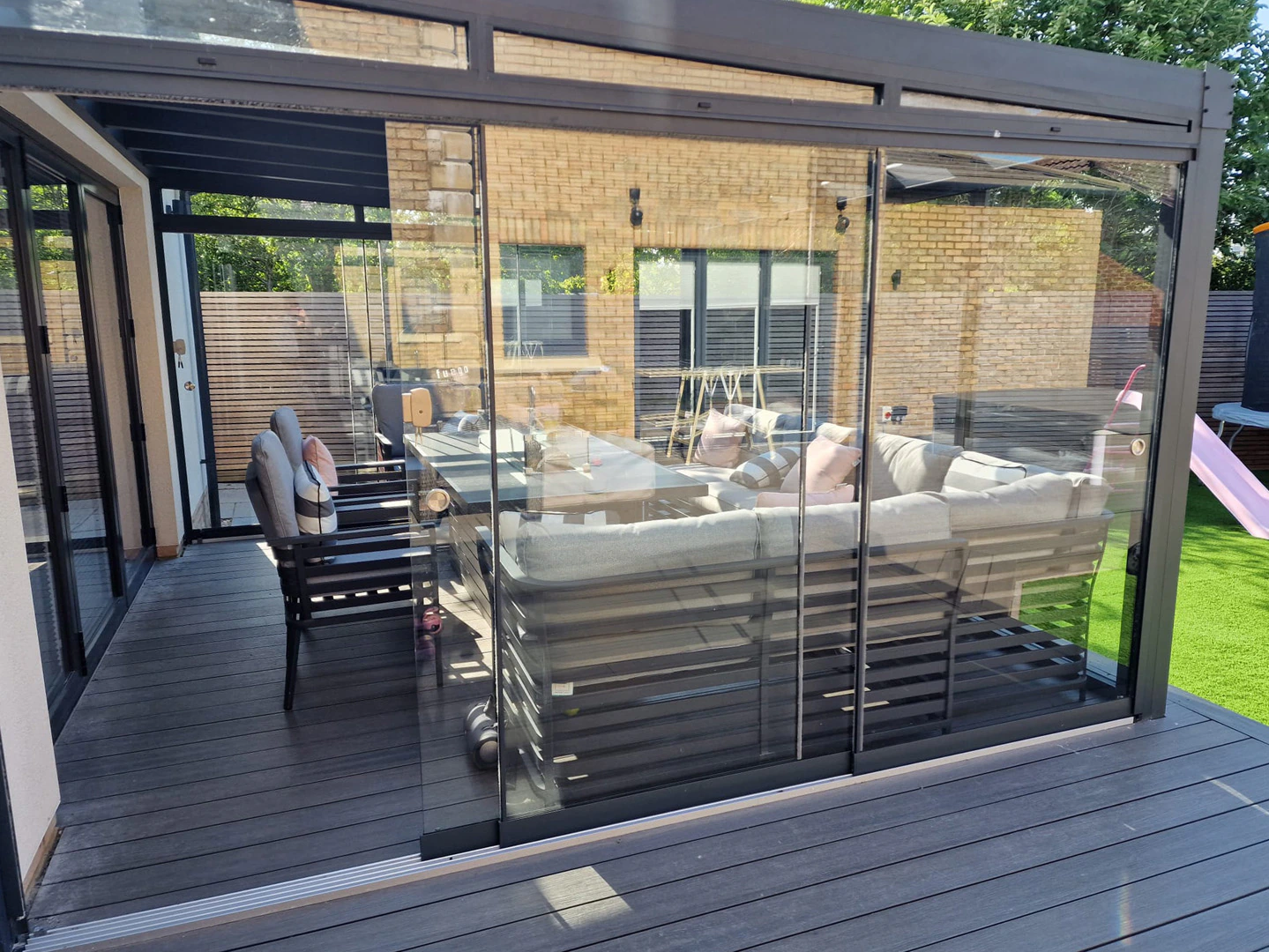
Lockable Sliding Glass
The most popular option. Fully sealed in winter, fully open in summer. Multi-track sliding doors lock for security.
Sliding Glass ›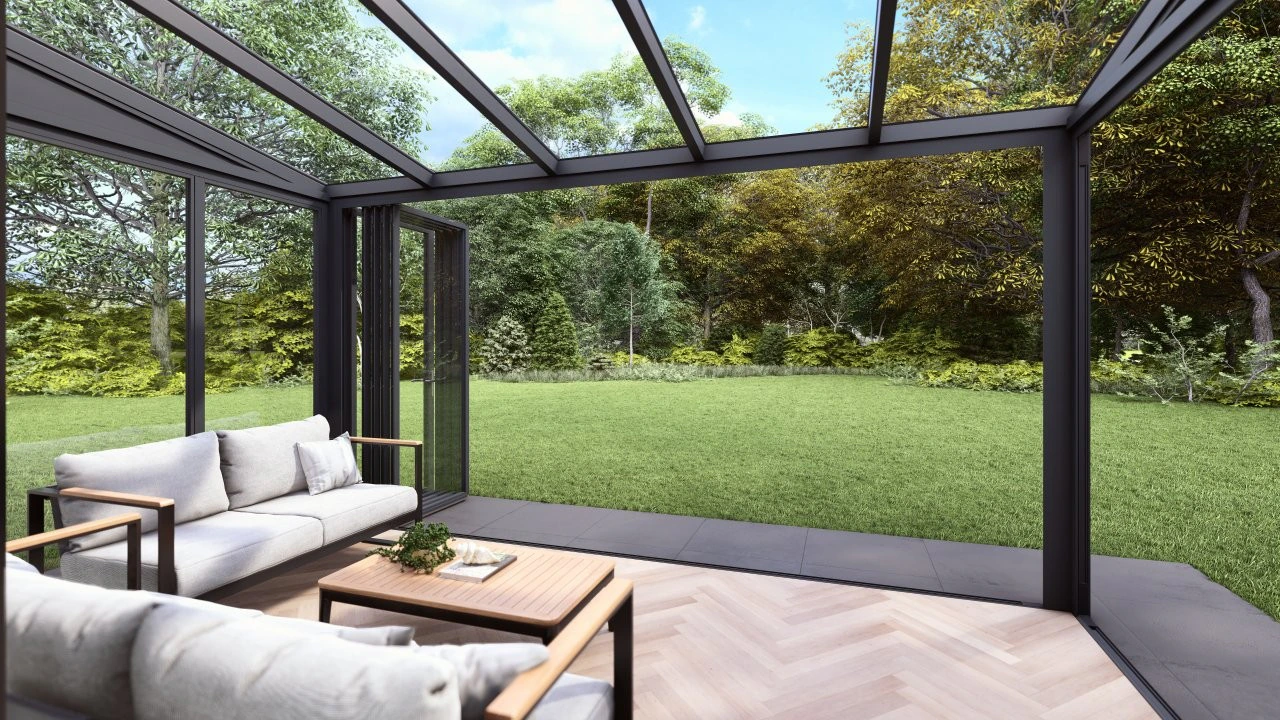
Slide & Tilt
Glass panels that slide and tilt for ventilation without fully opening. Best where airflow control matters.
Slide & Tilt ›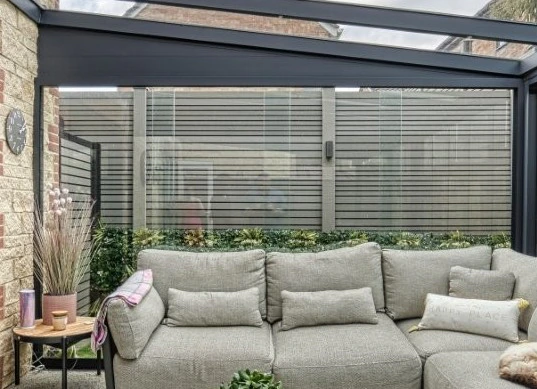
Fixed Glass Wall
Permanent glass enclosure on one or more sides. Cheaper than sliding doors and ideal for windward or boundary walls.
Fixed Glass Wall ›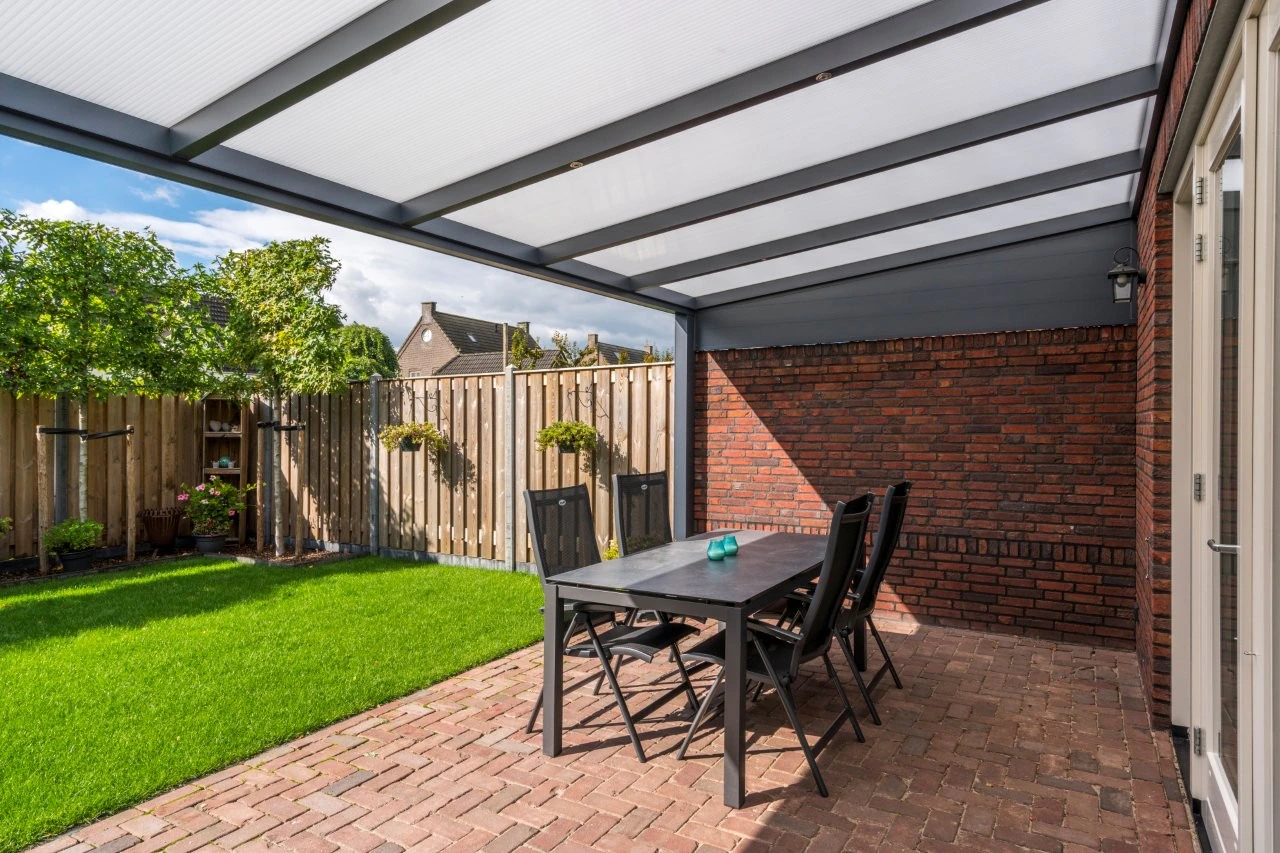
Aluminium Wall
Solid aluminium panels for full privacy or screening. Useful against neighbouring boundaries or for noise reduction.
Aluminium Wall ›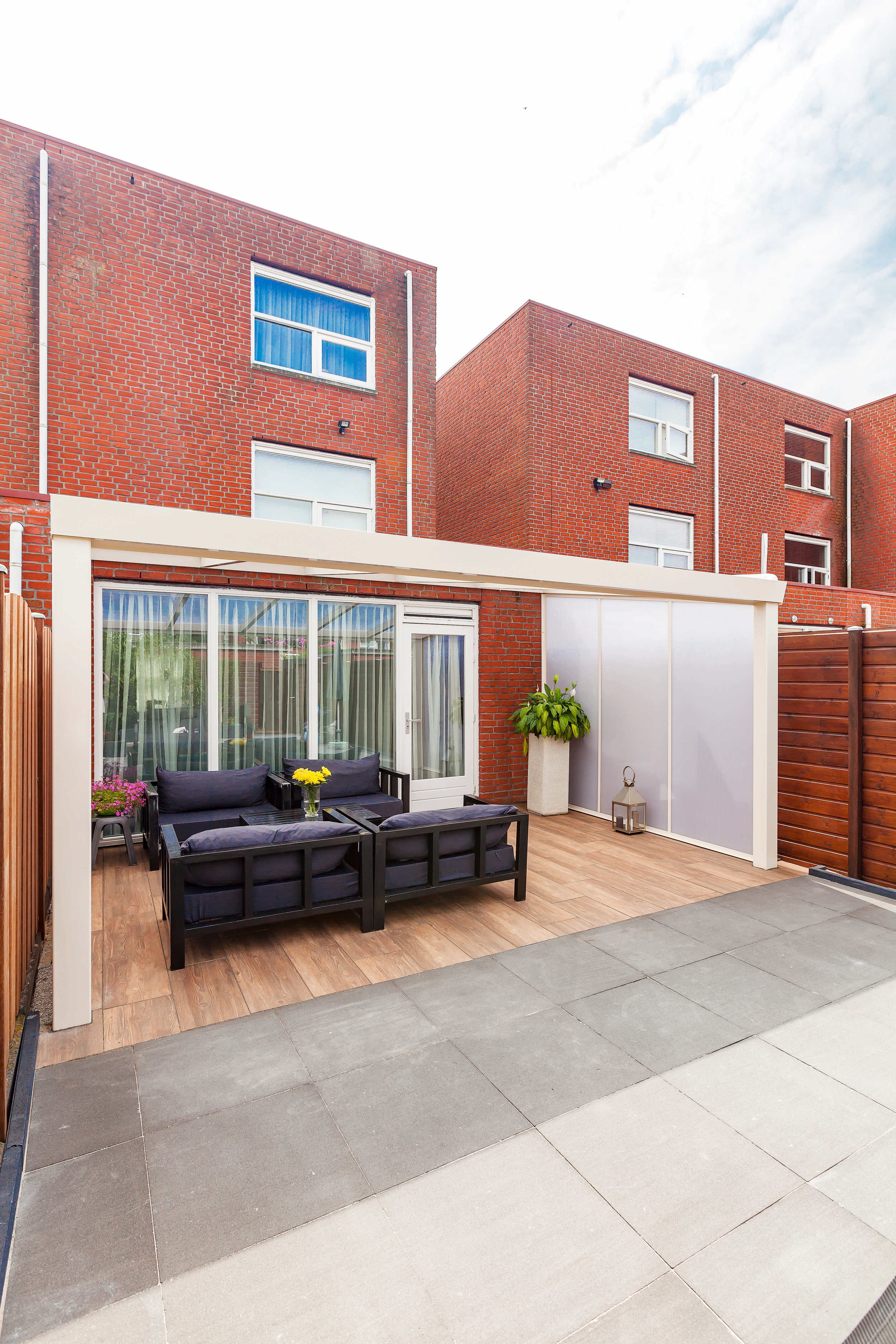
Polycarbonate Wall
Translucent polycarbonate panels — cheaper than glass, lets through diffused light, used as windbreaks.
Polycarbonate Wall ›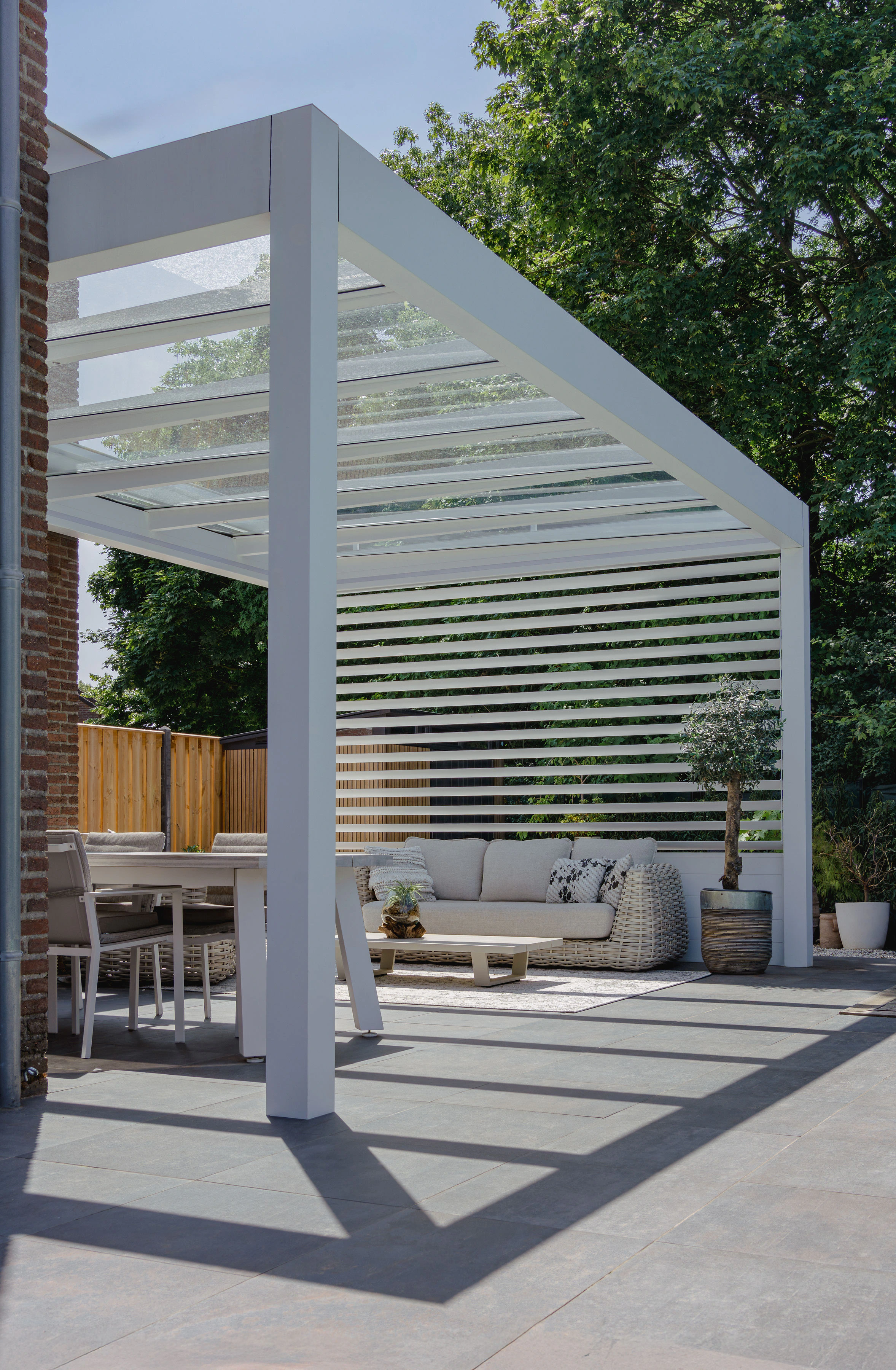
Louvred Walls
Adjustable aluminium louvres — rotate to control airflow and privacy. The most flexible option for partial enclosure.
Louvred Walls ›The deep dive into each option is in Veranda Side Options Explained. Most garden rooms combine two or three side options — sliding glass on the open side, fixed glass on the windward side, aluminium panels on the boundary side — rather than picking one for the whole structure.
Three typical configurations
To make this concrete, three garden room builds we install regularly:
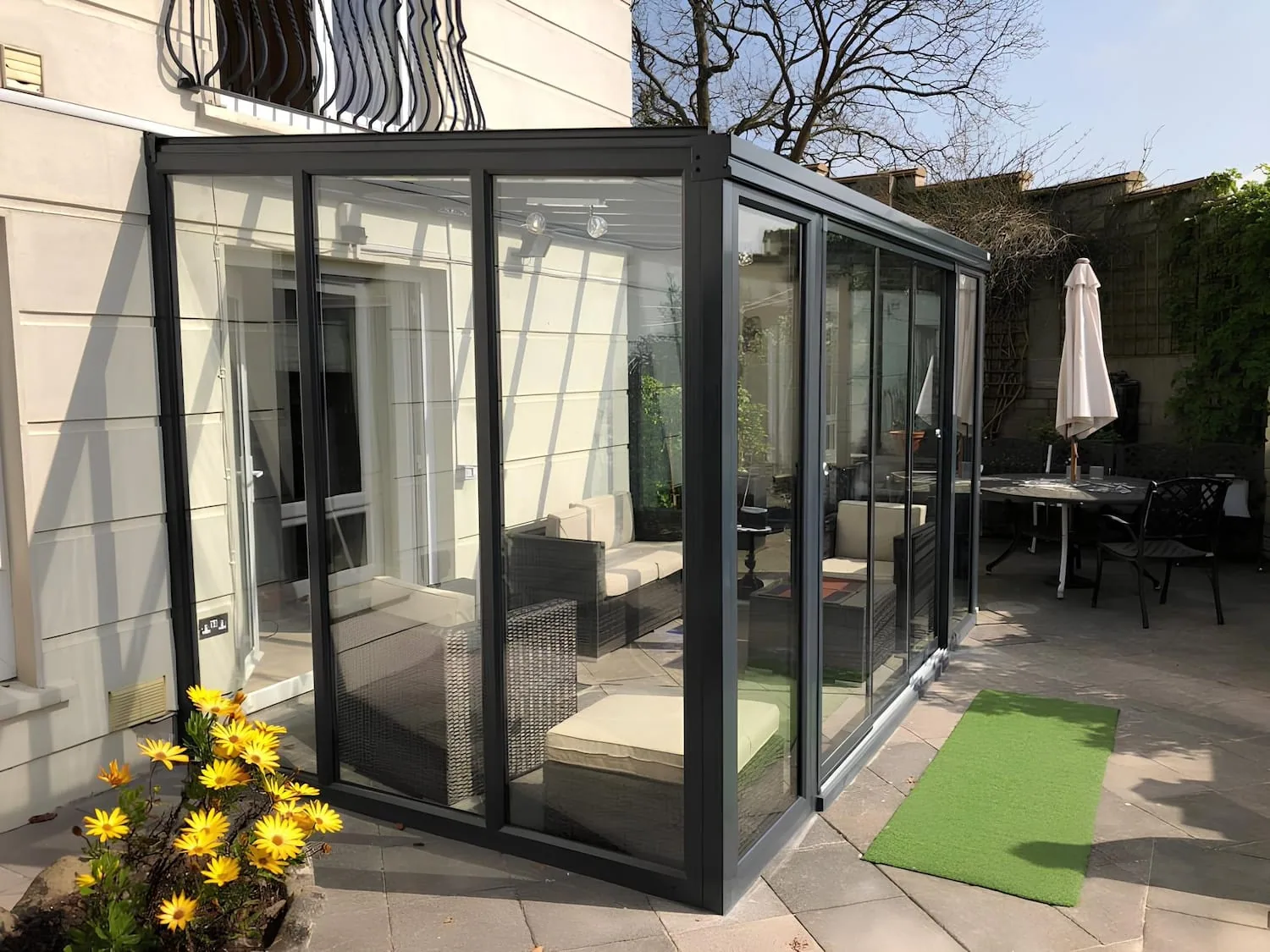
Final cost depends on size, glass spec, side option mix, and any site-specific extras (drainage, electrical, lighting). Live size-by-size pricing is on the Verandas hub.
What you can use a garden room for
The space itself is just covered, year-round-usable square footage — what you do with it is up to you. The most common uses we install for:
- Home office. Quiet, sealed work space with daylight and a view of the garden — properly separate from the rest of the house, but still steps from the kitchen.
- Year-round dining room. Eat outside in any weather. Sliding glass doors open the space completely in summer; sealed and heated in winter.
- Lounge or second living room. Overflow living space at a fraction of the cost of a brick extension, useful when the existing rooms are crowded or family-busy.
- Gym or yoga studio. Daylight, ventilation, and no shared walls means no bothering the rest of the house at six in the morning.
- Hot tub cover. Year-round shelter for an existing or new hot tub, without committing to a permanent enclosure or losing the open feel of the garden.
- Music, art or hobby studio. Genuine separation from the main house — quieter for music, less mess in the rest of the house for painting or pottery.
Planning permission for a garden room
Planning rules differ depending on whether the structure is treated as an extension or as a separate outbuilding. Because our garden rooms attach to the house via a veranda frame, they typically fall under Permitted Development as a domestic extension — no planning application required for most domestic properties. The exceptions are listed buildings (always need consent), conservation areas (often have Article 4 directions tightening the rules), and any raised platform more than 30cm above ground level.
Detached SIP or timber garden rooms are governed by outbuilding rules — a different set of constraints including a 2.5m height limit within 2m of a boundary, a maximum 50% rear-garden coverage, and a single-storey requirement. If you’re comparing a TGVC garden room with a detached outbuilding, the planning differences alone can be the deciding factor.
We check your specific property as part of the free survey before you commit. The full technical guide is in our Veranda Planning Permission UK article, and the official rules sit on the government’s Planning Portal — when permission is required page.
Cost — what to expect
Every garden room is quoted all-in (frame + roof + side options + install + VAT). The price depends on three variables:
- Size — depth and span. A 3×3 m partly enclosed garden room sits at the bottom of the range; a 6×4 m fully glazed Vista build sits at the top.
- Roof type — glass adds typically 40–60% over polycarbonate but is silent in rain and lasts longer.
- Side option mix — sliding glass doors are the most expensive (priced by linear metre); aluminium and polycarbonate panels are the cheapest. Most builds combine two or three.
For comparison, a comparable SIP or timber garden room from a UK supplier typically runs £15,000–£40,000+ installed including foundations — so the aluminium-and-glass approach is generally cheaper for the same usable footprint, though that's not the whole story (a SIP building is fully insulated by default, ours uses heaters and double-glazed sides).
Year-round usability — what it actually takes
To make a garden room genuinely year-round in the UK climate, three things matter:
- Full enclosure when sealed — sliding glass doors with proper seals, plus a fixed glass wall on the windward side. Half-measures leak draughts in winter.
- Heating — infrared heaters on the underside of the roof are the standard; underfloor heating works if you're laying a new floor; electric oil-filled radiators are the cheapest add-on.
- Ventilation in summer — even with sliding glass closed, you need a way to vent heat. Slide-and-tilt panels or louvred walls solve this elegantly.
The deep dive on year-round use is in 5 Ways to Use Your Veranda Year-Round.
Get a Garden Room Quote
Honest starting prices on every veranda model. No location-based surcharges, no high-pressure sales, no waiting on a brochure. Request a written quote for your garden room or book a free survey at a time that suits you.
See Starting Prices Call 0800 654 69 64