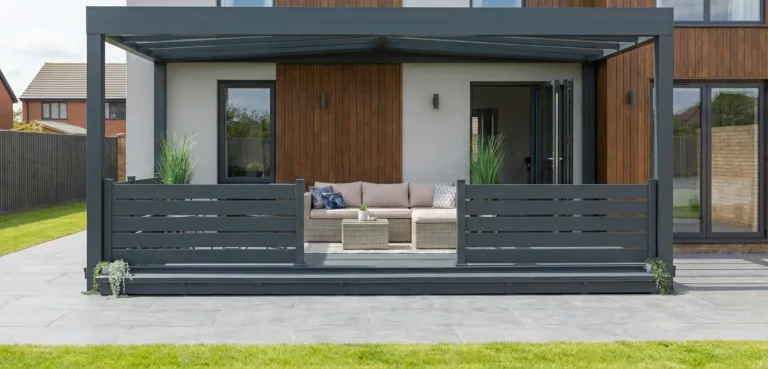
What is a polycarbonate veranda?
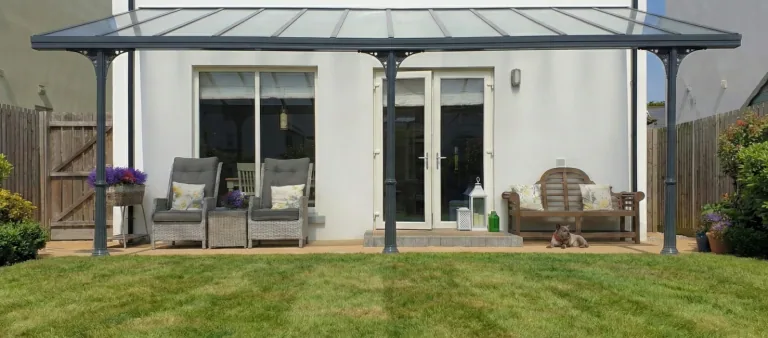
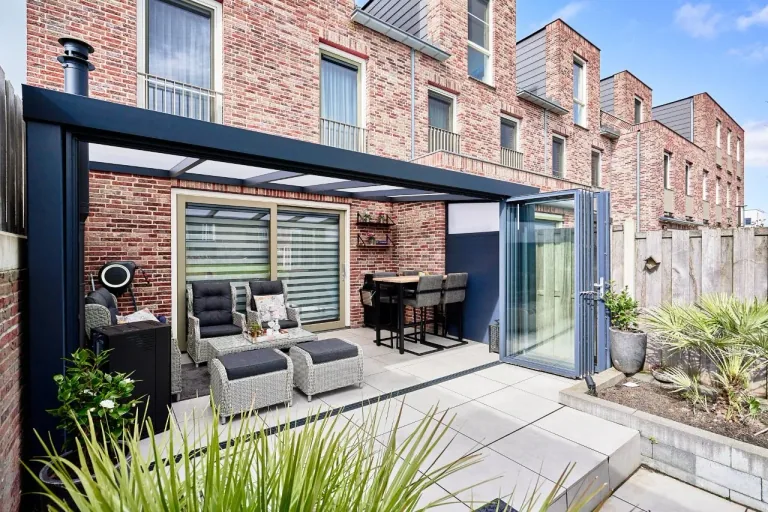
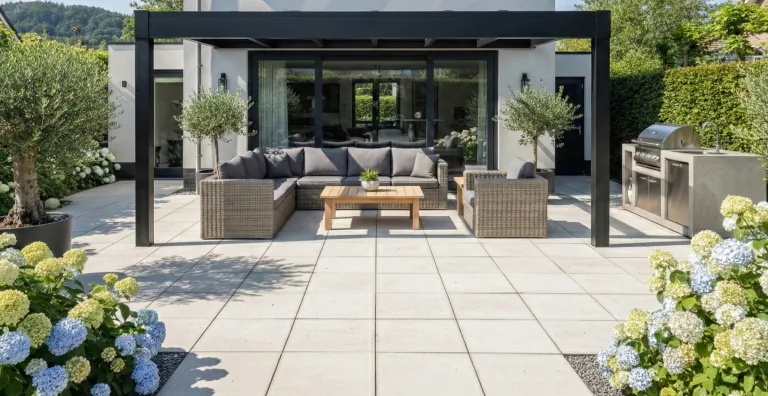
A polycarbonate veranda is a covered outdoor structure with a multi-wall plastic roof supported by aluminium posts, typically fixed to the side of your home. The polycarbonate panels are translucent, lightweight, and roughly 10–40% cheaper than equivalent glass. Modern polycarbonate is nothing like the brittle plastic you may have seen on a 1990s conservatory — it's now the same material used on commercial greenhouses, bus shelters and motorway canopies. Tough, UV-protected, and good for decades.
Our range covers four polycarbonate-capable models. The Bolthole is our entry-level polycarbonate-only choice. The Haven, Sanctuary and Pavilion can each be specified with either polycarbonate or glass — on this page we've defaulted the pricing to polycarbonate. Flip the roof toggle on any card to see the glass price for comparison.
Why choose polycarbonate over glass?
Two reasons dominate: cost and weight. Glass is the premium finish, but polycarbonate makes a veranda accessible on a much wider range of budgets — often making the difference between "this is nice but expensive" and "let's do it". The lightweight panels also allow slightly larger spans on some models at the same post spec.
Polycarbonate is the right pick when:
- Budget is the primary constraint — the 30–50% saving over glass is real and material.
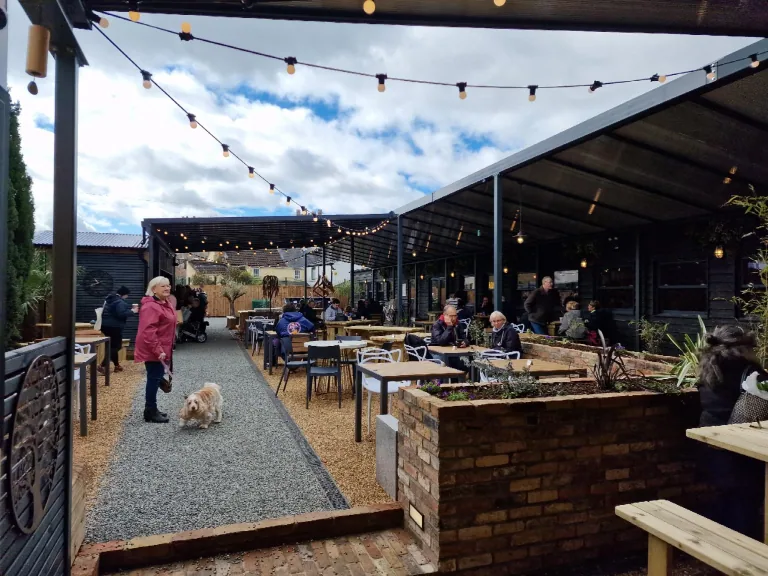
- The veranda is a practical cover, not a decorative centrepiece — e.g. covering a side passage, protecting a back door, sheltering a washing line, a dog run, or a children's play area. Glass isn't adding value in these use cases.
- You want a larger footprint for the same budget — you can often get a 6m polycarbonate veranda for the price of a 4m glass one.
- You need more thermal insulation — multi-wall polycarbonate with internal air chambers actually insulates better than single-pane glass (though most buyers don't factor this in).
Glass is the right pick when noise matters (rain on polycarbonate is audibly noisier), when you want the premium architectural look, or when the veranda is a primary dining / entertainment space. We won't push you toward either — the survey is about getting you the right roof for your use case. For the full comparison, read our Glass vs polycarbonate veranda roof guide.
What polycarbonate is actually in the roof?
Not all polycarbonate is the same. Here's what you're getting:
- Twin-wall (16mm) — two surfaces with an internal chamber. Standard on entry-level veranda roofs. Good insulation, good impact resistance, lowest cost.
- Triple-wall (25mm) — three surfaces with two internal chambers. Better insulation (U-value around 1.8 W/m²K), better sound damping, slightly higher cost. Our usual recommendation for UK weather.
- Five-wall (25mm+) — premium upgrade for maximum thermal and acoustic performance.
- Panel tints — clear (maximum light), opal (diffused light, more uniform), bronze (mild tint for sun-heavy aspects), or solar-control (heat-rejecting). Opal is the most popular because it reduces glare without looking tinted.
All our polycarbonate panels have a UV-protective co-extrusion on the top surface, which dramatically slows yellowing. Standard product warranty on the panel is typically 10 years for colour stability; the expected life before any noticeable yellowing is 20–30 years.
Is polycarbonate really affordable — what does it save you?
The price delta depends on the model and size — modest on the smallest verandas, rising to around 40% on larger footprints. On a 4m × 3m Haven, that's roughly £580 saved. On a 6m × 4m Pavilion it's closer to £5,400. The saving scales with footprint, which is why polycarbonate is especially attractive on larger verandas where the absolute cost delta gets significant.
Critically, polycarbonate doesn't save money by using worse aluminium. Our polycarbonate verandas use the exact same 6063-T6 architectural-grade aluminium frame as our glass verandas — and on the Haven and Pavilion, the same QUALICOAT Seaside marine-grade powder coating with a 60-year design life. The roof panel is the only difference.
Do I need planning permission for a polycarbonate veranda?
In most cases, no — the rules for polycarbonate verandas are the same as for any modern aluminium veranda, and most installations fall under Permitted Development rights. The usual exceptions apply: listed buildings, conservation areas, raised platforms, front-elevation installations, and certain height or boundary constraints. We check your specific property during the free survey and advise before you commit. For the full rules, see our detailed Veranda planning permission UK guide or our all verandas hub.
How much does a polycarbonate veranda cost in the UK?
UK polycarbonate veranda prices depend on size, post count, model and any side options. Indicative starting prices at 4m × 3m (smallest standard size), installed and VAT-included:
- Bolthole — from around £5,200 (Dutch-built, polycarbonate only, entry-level)
- Haven — from around £5,400 (British-built polycarbonate, 60-year frame lifespan)
- Sanctuary — from around £5,600 (Dutch-built polycarbonate, up to 6m spans)
- Pavilion — from around £6,000 (British-built polycarbonate, up to 6m deep)
Starting prices are shown on each card above — tap Get My Quote for a written price for your exact dimensions. Every quote includes installation and VAT with no hidden add-ons. For a detailed cost breakdown see our Veranda costs pricing guide.
Is there a maximum size for a polycarbonate veranda?
Per-unit limits range 6m depth (Bolthole, Sanctuary, Pavilion) to 4m (Haven), and 4–6m post spans depending on the model. But overall width is not capped — multiple polycarbonate verandas can be installed side-by-side as one continuous run with a shared gutter line. This is one polycarbonate advantage over glass for really large footprints: the lighter panels keep structural spec simpler on multi-unit builds.
How long do polycarbonate panels last?
The aluminium frame is engineered for 25–60 years depending on model (British-built Haven and Pavilion: 60 years; Dutch-built Bolthole and Sanctuary: 25–35 years). Polycarbonate panels typically last 20–30 years before UV yellowing becomes visually noticeable — and crucially, panels can be replaced cost-effectively without rebuilding the veranda. So you can think of a polycarbonate veranda as a long-term structure with a refresh item (the panels) every 20–30 years. On our glass-capable models, you can also upgrade to a glass roof at panel-replacement time.
Which polycarbonate veranda model should I choose?
Each model in our polycarbonate range suits a different priority. Quick shortlist:
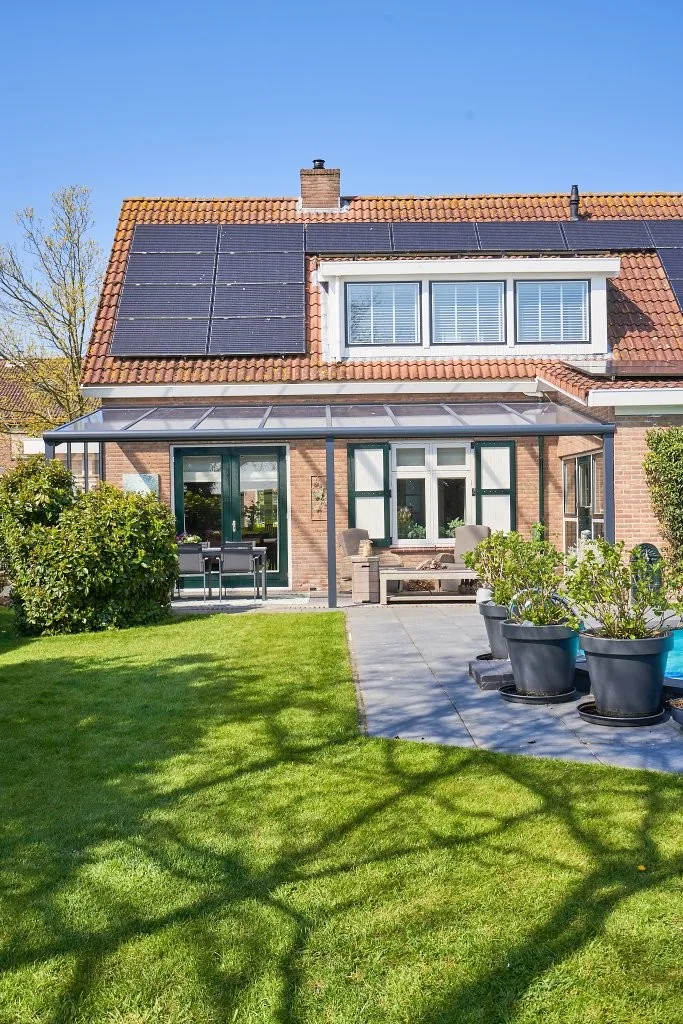
- Best value — the Bolthole. Dutch-built, fully customisable size and colour. From around £5,200 installed. Polycarbonate only, so you're not paying for flexibility you won't use.
- Premium build, same price — the Haven. British-built polycarbonate with QUALICOAT Seaside marine coating and 60-year frame design life. Similar entry price to Bolthole but significantly longer-lasting. Our usual recommendation for polycarbonate buyers who plan to stay in the home.
- Biggest polycarbonate footprint — the Sanctuary. Dutch-built with up to 6m depth and 6m between posts. Best if you want a large covered area affordably.
- Large entertaining spaces with British build quality — the Pavilion. British-built polycarbonate, up to 6m deep, marine coating, 60-year frame.
Looking at glass options instead? See our Glass Verandas hub. Or compare the full range including both options on the all verandas hub. Call us on 0800 654 69 64 for an honest chat with no obligation.

 Best Value